
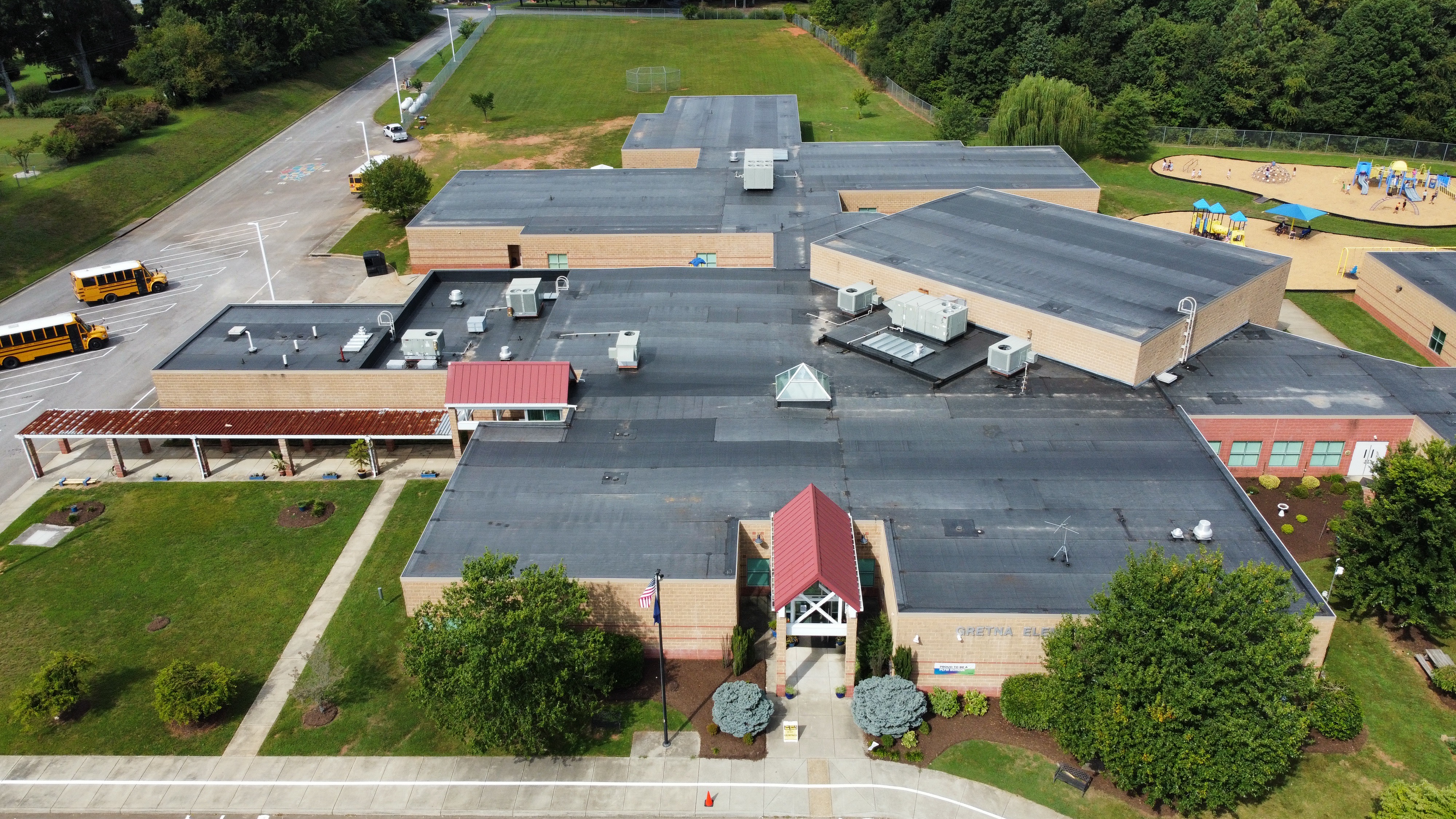
California's academic calendar provides KHSD a summer break of roughly ten weeks, typically from mid-June to mid-August. Given Bakersfield's extreme summer heat, the actual window of comfortable and safe outdoor roofing work is compressed at both ends: June can still see high temperatures that approach 105 degrees, and early August often brings the same. The most productive window for KHSD summer roofing is late June through mid-July, when temperatures are high but not peak, and afternoon hours retain enough daylight for substantial work. Contractors who specialize in Kern County school work build heat illness prevention protocols into their summer programs—water, shade, rest intervals, and heat acclimatization schedules—as standard practice rather than regulatory add-ons.
California's prevailing wage law applies to all KHSD public works contracts, and the district's procurement processes are well-practiced at incorporating DIR prevailing wage requirements into bid documents, contractor registrations, and payroll verification. Kern County roofing classifications under the DIR's wage determinations must be verified for each new determination period, as California updates prevailing wage schedules on a regular cycle. KHSD's construction management office verifies DIR contractor registration status for all bidders before opening proposals and requires payroll submittals for verification throughout active construction periods.
Multi-building KHSD roofing programs are funded through the district's Measure K and Measure L bond programs, which provided combined authorization for several hundred million dollars in facility improvements. California school bond programs funded through the Leroy F. Greene School Facilities Act may be eligible for state matching funds through the Office of Public School Construction, and KHSD's facilities staff have successfully pursued state participation funding for qualifying roofing projects in multiple bond cycles. The DSA submittal and OPSC application process adds planning lead time to KHSD projects—typically six to nine months for DSA review of qualifying submittals—which must be accounted for in the project development schedule.
DSA jurisdiction over California school construction extends to roofing projects that involve structural modifications, parapet changes, or drainage system alterations. KHSD's design teams have become proficient at identifying which project elements require DSA review and which fall within the maintenance and repair exemption, structuring project scopes to minimize unnecessary review while maintaining full compliance. The district's standard practice is to include a DSA pre-application consultation as a project development cost for any KHSD roofing project that involves structural components, ensuring that review requirements are identified before the design is finalized and before the budget is set.
Occupied school safety for KHSD fall and spring shoulder-season work presents specific challenges on the large acreage campuses of Kern County high schools, where student populations of 2,000 to 4,000 occupy outdoor spaces—courtyards, lunch areas, athletic fields—that may be adjacent to building walls below active roofing work. KHSD's facilities department requires a site-specific safety plan for all occupied-season roofing work that maps every student and staff exclusion zone in relation to the work area, identifies the responsible staff member for each zone, and specifies the communication protocol if a safety boundary is compromised during school hours.
Asbestos management for KHSD's pre-1980 building inventory follows California's rigorous school asbestos requirements under the Asbestos School Hazard Abatement and Reauthorization Act and the California Hazardous Materials program. KHSD maintains current asbestos management plans for all buildings, and the district's environmental compliance coordinator reviews each roofing project scope against those plans before the project is advertised for bids. Abatement scopes that arise from the review are incorporated into the bid documents so that all contractors price from the same complete scope—avoiding the change order disputes that result when ACM is discovered during tear-off on a project where the abatement scope was not properly defined at bid time.
The long-term value of KHSD's bond-funded roofing investments is protected by the district's systematic post-installation inspection and maintenance program. KHSD contracts with a professional roofing consultant for annual inspections of all buildings completed in the past ten years, generating condition reports that are reviewed by the district's capital planning committee and used to inform future capital program priorities. This institutional knowledge—maintained in a facilities management database and reviewed annually rather than waiting for leaks to appear—allows KHSD to intervene with targeted maintenance repairs at the point of minor defects rather than waiting for those defects to become major failures requiring full replacement cycles ahead of schedule.
- How does Bakersfield's extreme heat affect KHSD roofing project planning?
- Summer surface temperatures at KHSD campuses approach 180 degrees Fahrenheit on dark existing roofing, and ambient temperatures regularly exceed 100 degrees from June through September. Contractors must implement OSHA and Cal/OSHA heat illness prevention requirements including water, shade, rest intervals, and heat acclimatization schedules. The most productive construction window is late June through mid-July, with early morning start times that maximize work hours before peak afternoon heat.
- What is the DSA review process for KHSD school roofing projects?
- The Division of the State Architect reviews California school projects for structural and life safety compliance. Roofing projects involving structural modifications, parapet changes, or drainage alterations require DSA review. KHSD includes a DSA pre-application consultation for any project with potential structural components, identifying review requirements before design is finalized and budget is set. DSA review adds six to nine months of planning lead time.
- How does KHSD access state participation funding for roofing through OPSC?
- California's Office of Public School Construction administers state matching funds for qualifying school modernization projects through the Leroy F. Greene School Facilities Act. KHSD's facilities staff have successfully pursued state participation for roofing projects in multiple bond cycles. Eligibility depends on building age, program type, and DSA submittal compliance. Apply early in the project development cycle—the combined DSA and OPSC process adds substantial planning lead time.
- How does Title 24 affect KHSD's roofing specification in Climate Zone 13?
- Climate Zone 13 has the highest cool roof performance requirements in California's Title 24 energy code. KHSD specifications must reference California Energy Commission-listed products meeting minimum solar reflectance and thermal emittance values. Meeting or exceeding these requirements produces measurable cooling load reductions across the district's large combined campus footprint, contributing to documented utility savings that the district reports to the Board of Trustees.
- What occupancy safety requirements apply to KHSD occupied-season roofing work?
- KHSD requires a site-specific safety plan mapping all student and staff exclusion zones in relation to work areas, identifying the responsible staff member for each zone, and specifying the communication protocol for boundary violations. The plan must be approved by the district's facilities department before work begins. Cal/OSHA-compliant fall protection for all workers and barricaded ground exclusion zones are required regardless of season.