
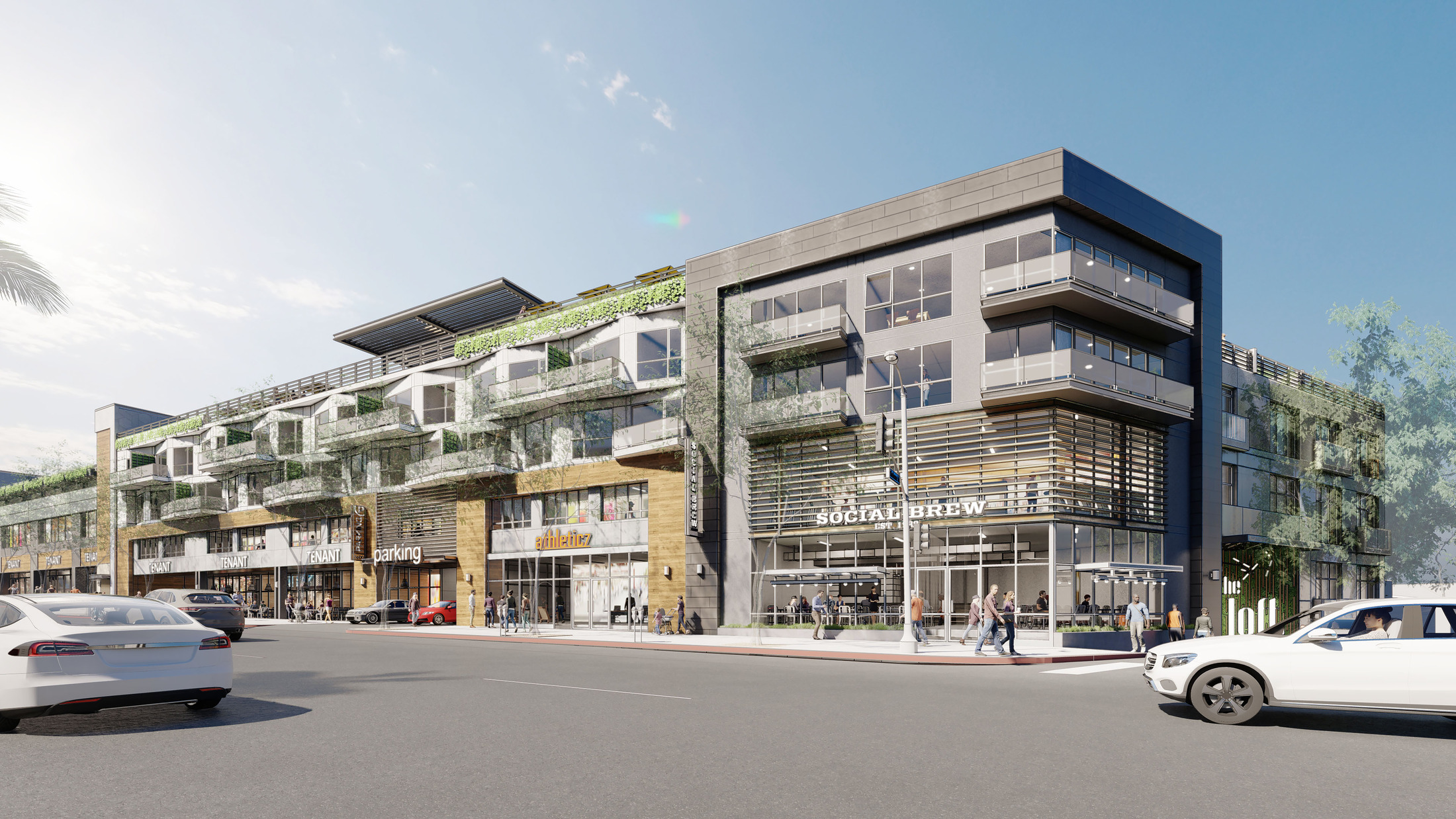
Bakersfield's downtown revitalization has brought the city's first significant wave of mixed-use development in a generation, with projects along the Chester Avenue corridor and the Union Avenue commercial district beginning to stack residential units above retail and restaurant uses in a pattern that the rest of the San Joaquin Valley's larger metros adopted earlier. The Bakersfield Centennial Plaza redevelopment and the adaptive reuse of several historic commercial buildings in the downtown core represent a shift in how the city is building for density, and the roofing demands of these projects differ substantially from the warehouses, big-box retail, and agricultural processing facilities that have historically defined the commercial roofing market here. Mixed-use construction in Bakersfield requires contractors whose skills extend across occupancy types and who understand the specific waterproofing and assembly requirements that apply when retail tenants and residential occupants share a single structural frame.
Bakersfield's climate is one of the most punishing in California for roofing assemblies. The city regularly records the highest summer temperatures in the state, with sustained periods above 105°F common from June through September, and rooftop temperatures on dark membrane surfaces routinely exceed 180°F during peak summer afternoons. This thermal loading accelerates oxidation in aged membranes, drives out plasticizers in flexible materials, and creates thermal cycling stress that fatigues flashing sealants within a small fraction of their rated service life. For mixed-use buildings in Bakersfield, highly reflective cool-roof membranes are not merely a California Title 24 energy code requirement — they are a practical service-life decision that reduces membrane surface temperatures by thirty to fifty degrees and meaningfully extends the time before replacement is required.
California Title 24 energy code compliance for mixed-use buildings in Bakersfield's climate zone requires insulation R-values that are among the highest mandated anywhere in the state, because the extreme summer cooling loads in the San Joaquin Valley drive the energy performance standard for the assembly. The roofing contractor must install the specified insulation in a configuration that has been reviewed and approved during the plan check process, and any field substitution of insulation thickness or type requires a formal plan change approval before work proceeds. On buildings with multiple occupancy types, the energy code compliance path may differ for the commercial portions and the residential portions, requiring the contractor to maintain a clear record of which assembly was installed in which zone for the final compliance documentation submitted to Building and Safety.
The transition between retail and residential occupancies in a Bakersfield mixed-use building requires the same fire-rated assembly coordination as anywhere in California, but the local construction labor market adds a practical challenge: the pool of subcontractors experienced in both commercial firestop systems and occupied-building coordination is smaller in Bakersfield than in Los Angeles or Sacramento. Building owners who assume that the cheapest bidder for a Bakersfield mixed-use reroofing project has equivalent experience to contractors from larger markets are frequently disappointed. The firestop component of the transition assembly in particular requires verified product-specific training, and contractors should be able to produce manufacturer training certificates for the specific firestop systems they propose to install.
Rooftop amenity decks on Bakersfield mixed-use buildings present a design challenge that few developers in this market have fully confronted: in a climate where outdoor temperatures make rooftop spaces uninhabitable for three to four months each summer, the economic justification for the premium waterproofing assembly required beneath an amenity deck is harder to sustain than in San Francisco or Los Angeles. The most successful Bakersfield mixed-use amenity decks have been designed with shade structures and misting systems that extend the usable season, and the roofing assembly beneath them has been specified to accommodate the mechanical and plumbing penetrations those shade and misting systems require. Every penetration through the waterproofing layer is a maintenance point, and in Bakersfield's heat, sealants at penetrations degrade faster than in most California markets.
Vegetated roof systems in Bakersfield face the challenge of keeping plant material alive in a climate with near-zero summer rainfall and extreme heat. Successful installations require integrated drip irrigation systems connected to potable or reclaimed water, drought-tolerant sedum or succulent species selected for San Joaquin Valley climate, and a growing media depth adequate for root development but light enough to remain within the structural deck's design load. The City of Bakersfield's stormwater requirements for urban development projects provide credit for vegetated roof retention capacity, which can reduce the required footprint of on-site retention basins — a genuine economic benefit on infill sites where land area is constrained.
Coordinating a reroofing project on an occupied Bakersfield mixed-use building during summer requires heat illness prevention protocols that exceed the general industry standard, because Bakersfield regularly records Cal/OSHA heat advisory conditions from June through September. Under California's Heat Illness Prevention Standard, employers must provide shade when temperatures exceed 80°F, and must implement high-heat procedures when temperatures exceed 95°F — a threshold that Bakersfield surpasses on roughly seventy days per year. The practical effect is that productive reroofing hours in Bakersfield's summer are compressed to the early morning, and contractors must factor this into their project timelines. Building managers who accept a contract with a summer completion date based on spring productivity assumptions should request a revised schedule that accounts for the high-heat work restrictions.
Noise management during reroofing in Bakersfield's downtown mixed-use buildings is a community relations matter as well as a tenant relations one. The city's downtown revitalization program depends on attracting the residential occupancy that makes ground-floor retail viable, and the reputation of a building during a reroofing project affects both current tenant retention and future leasing velocity. Experienced contractors in this market have learned to pre-stage materials using weekend crane picks when pedestrian activity in the downtown core is lower, schedule the loudest mechanical demolition for the Tuesday-through-Thursday mid-morning window when retail activity is typically lowest, and provide building management with a daily work log summarizing what was completed and what is planned for the next day.
Long-term maintenance agreements for Bakersfield mixed-use roofing assemblies should be calibrated to the climate's specific failure patterns. The primary maintenance driver in Bakersfield is thermal degradation of sealants and flashings, not storm damage. Annual inspections should focus on the condition of sealants at all penetrations and perimeter flashings, since these are the first elements to fail in extreme heat. The inspection interval for a Bakersfield building should be every twelve months rather than every two years, and any sealant showing cracking or separation should be replaced in the same inspection cycle rather than flagged for the following year. The cost difference between proactive sealant maintenance and emergency waterproofing repair after a first significant rain event is typically a ten-to-one ratio in favor of the annual inspection program.
- Why are cool-roof membranes particularly important in Bakersfield?
- California Title 24 energy code mandates cool-roof compliance for most commercial and mixed-use buildings, but in Bakersfield's climate zone the performance benefit exceeds the compliance requirement. Cool-roof membranes with high solar reflectance reduce rooftop temperatures by thirty to fifty degrees compared to dark membranes, which directly reduces the cooling load on the floors below and extends the membrane's service life by reducing thermal cycling stress. On a mixed-use building with commercial cooling systems serving ground-floor retail and residential systems serving the apartments above, the energy savings from a cool roof can be significant enough to contribute meaningfully to the building's operating cost profile.
- What Cal/OSHA requirements affect roofing work in Bakersfield during summer?
- California's Heat Illness Prevention Standard, Title 8 CCR Section 3395, requires employers to provide shade, fresh water, and rest breaks for outdoor workers when temperatures reach 80°F, and mandates high-heat procedures including mandatory ten-minute cool-down breaks and buddy checks when temperatures reach 95°F. Bakersfield's summer temperatures exceed 95°F on roughly seventy days per year, making these procedures a daily operational requirement rather than an occasional precaution. Building managers should verify that any contractor working during summer months has a written heat illness prevention plan and that supervisory personnel have received Cal/OSHA-compliant training.
- How does Bakersfield's seismic zone affect rooftop equipment anchorage?
- Bakersfield falls within a moderate seismic hazard zone, and California Building Code seismic provisions require rooftop mechanical equipment to be anchored to the structural deck in a manner that resists the calculated seismic forces for the specific equipment weight and the building's seismic design category. Improperly anchored equipment can shift during a seismic event and damage the roof membrane at the curb, creating a water infiltration pathway that may not be immediately visible. Any reroofing project that includes equipment replacement should verify that new curbs and anchor details meet current CBC seismic requirements.
- What are the most common roofing deficiencies found on Bakersfield mixed-use buildings?
- The most common deficiencies are sealant failure at penetrations and counterflashing joints due to thermal degradation, ponding water at low points on flat roof sections where drains have been undersized for the contributing area, and membrane blistering on sections installed during peak summer heat without proper outgassing precautions. Secondary deficiencies include deteriorated pipe insulation on rooftop HVAC components exposed to direct solar radiation and improper termination bar installation at parapet walls where thermal movement has pulled the membrane away from the substrate.
- What should a Bakersfield building owner require in a mixed-use roofing warranty?
- The warranty should cover the full system including flashings and penetrations, not just the field membrane, and should specifically address the California Title 24 cool-roof performance requirement for the duration of the warranty term. The warranty provider's financial stability and their track record of honoring warranty claims in California's commercial market should be verified, since a warranty from a manufacturer without a California service presence is of limited practical value when a claim needs to be investigated. Warranty duration of at least fifteen years for a new installation is reasonable to request on a Bakersfield mixed-use building.