
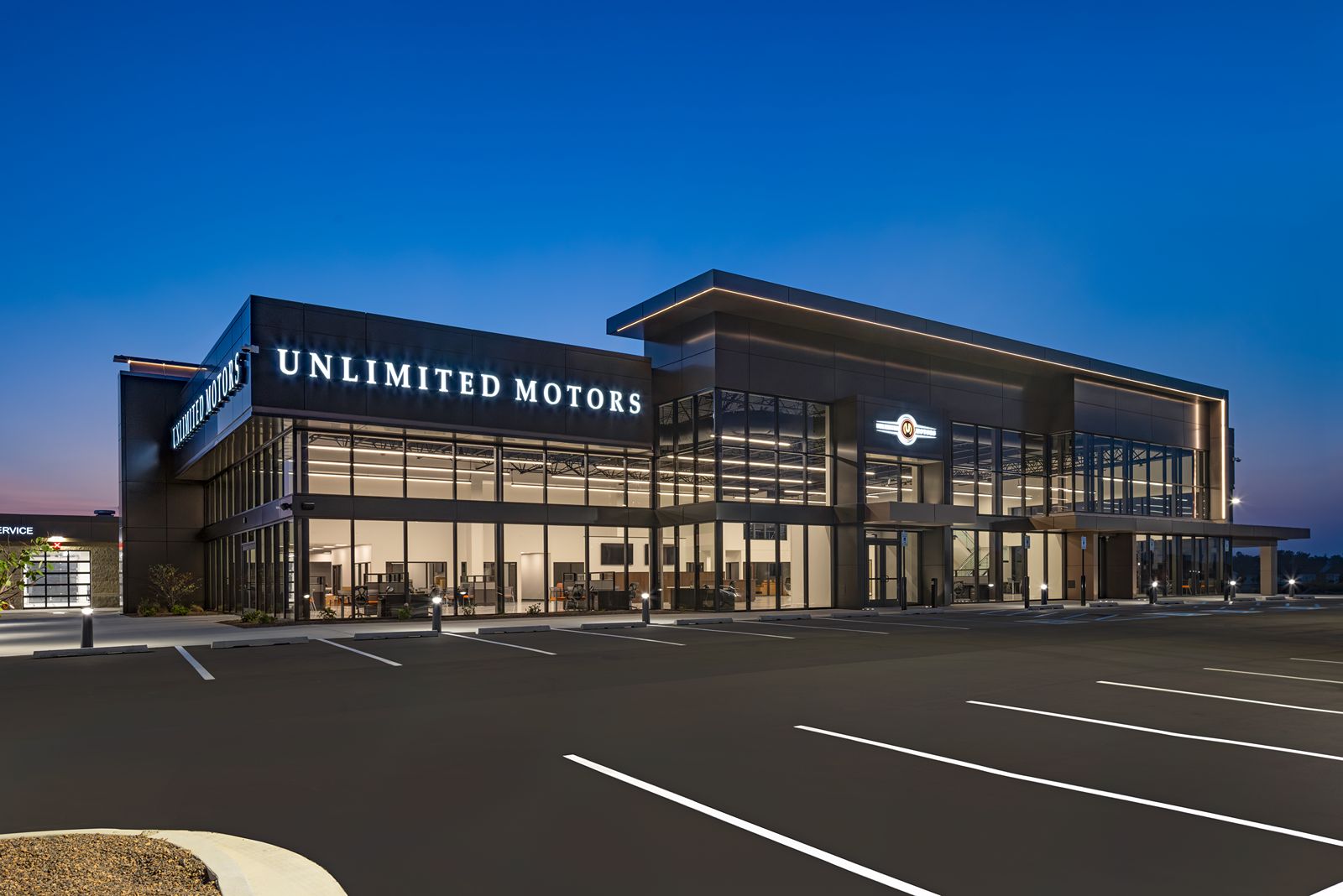
Bolles Motors has served the Bakersfield automotive market for decades, with Chevrolet and other franchise operations representing the kind of established, community-rooted dealership that defines the Central Valley's auto retail landscape alongside newer multi-franchise groups. Bakersfield's dealership market serves Kern County's agricultural and energy workforce — a customer base that puts high mileage on pickup trucks and work vehicles, generating strong service department revenue that dealers protect fiercely. Roofing dealership facilities in Bakersfield means working in one of the most thermally extreme commercial environments in California, where 110°F summer temperatures and California's strict energy and air quality codes combine to create a demanding specification environment.
Bakersfield's extreme summer heat creates the most demanding thermal roofing conditions in the Central Valley. Rooftop surface temperatures on dark membranes can exceed 190°F in direct summer sun, and service departments below these surfaces require massive HVAC capacity to maintain workable conditions for technicians. Cool roof specifications are both a California Title 24 requirement and an economic imperative in Bakersfield's climate — the energy cost differential between a dark and a white roofing surface over a service department in Kern County compounds to a significant sum over a 20-year membrane life. White TPO is the dominant membrane choice for Bakersfield dealership roofing.
SJVAPCD compliance governs adhesive and coating product selection for Bakersfield dealership roofing projects in ways that affect all aspects of the project, not just the membrane installation. Touch-up coatings for parapet cap metal, sealants for penetration flashings, and adhesives for edge metal terminations must all meet SJVAPCD VOC limits. Contractors who have worked primarily outside the San Joaquin Valley sometimes discover compliance issues mid-project when inspectors ask for product documentation, causing delays and potential project interruptions. SJVAPCD compliance is a baseline requirement for any contractor working in Kern County.
Service department skylights at Bakersfield dealerships face extreme heat exposure that accelerates gasket and sealant degradation faster than in any other California market. The combination of 190°F surface temperature adjacent to skylight frames, UV radiation at an intensity proportional to Kern County's high elevation and low cloud cover, and the thermal cycling from hot summer days to cool winter nights creates the most aggressive weathering environment for skylight flashings in California. Bakersfield dealership skylights should be inspected annually, with sealant and gasket replacement as needed, to prevent the premature failures that UV and heat exposure produce in this climate.
Occupied operations during Bakersfield dealership roofing projects face a specific hot-weather challenge — roofers working in summer conditions above service departments are working in temperatures that require heat illness prevention programs under California labor regulations. Cal/OSHA's heat illness prevention standard applies to outdoor workers in Kern County, and contractors must provide shade, water, and cool-down periods that affect the daily productivity of the roofing crew. This is not a nicety but a legal requirement, and dealers should understand that contractor bids for summer Bakersfield work will reflect the additional time and provisions required for heat illness compliance.
HVAC at Bakersfield dealership parts and paint departments runs essentially year-round because the Central Valley's climate does not provide natural ventilation relief at any point in the annual cycle. Paint operations require conditioned air for quality control reasons, and parts storage requires temperature and humidity management to protect inventory from the effects of extreme heat. The roof penetrations serving these systems are subject to the same UV and thermal cycling challenges as the rest of the roof, and penetration sealants in Bakersfield should be rated for the extreme temperature range and UV exposure specific to the Central Valley environment.
Seismic bracing for rooftop equipment is a California Building Code requirement that applies to Bakersfield dealership roofing projects. Kern County is seismically active — the 1952 Kern County earthquake and subsequent events have established the region's seismic risk — and rooftop HVAC units, equipment screens, and structural penetrations must be braced per current CBC seismic requirements. Contractors who are unfamiliar with California seismic design sometimes overlook curb attachment and equipment bracing requirements that California-licensed contractors treat as standard scope.
Service lane canopies at Bakersfield dealerships face year-round UV exposure that degrades metal coatings and membrane systems faster than in coastal California markets. Annual inspection of canopy fasteners, coating condition, and gutter systems is appropriate for Kern County's environment, and canopy replacement or coating refreshment may be required on a 12–15 year cycle rather than the 20–25 year cycle typical in milder climates. Metal panel systems with high-durability coatings — PVDF fluoropolymer rather than polyester — provide meaningfully better long-term performance in Bakersfield's UV-intensive environment.
Bakersfield's position as California's most oil-dependent major city creates a roofing demand profile that includes industrial facilities alongside standard commercial dealerships. The commercial roofing contractor market includes firms that specialize in industrial applications and others focused on standard commercial work. Dealers evaluating roofing contractors in Bakersfield should look for experience with California compliance requirements — Title 24, SJVAPCD, Cal/OSHA, CBC seismic — alongside the climate-specific performance requirements of the Central Valley's extreme heat environment.
- What cool roof requirements apply to Bakersfield dealership roof replacements?
- Bakersfield is in California climate zone 13. Title 24 requires minimum solar reflectance of 0.63 and thermal emittance of 0.75 for low-slope replacement roofs. Compliance documentation is required with building permit applications to the Bakersfield building department.
- How do SJVAPCD requirements affect roofing product selection in Bakersfield?
- All adhesives, sealants, and coatings must meet SJVAPCD VOC limits. This applies to membrane adhesives, penetration sealants, and touch-up coatings for metal. Contractors must maintain product compliance documentation for potential district inspections.
- What Cal/OSHA heat requirements apply to Bakersfield summer roofing work?
- Cal/OSHA's heat illness prevention standard requires shade, water, cool-down periods, and emergency response procedures for outdoor workers in Kern County's summer heat. These requirements affect crew productivity and should be factored into bid pricing for summer work.
- How often should Bakersfield dealership service department skylights be inspected?
- Annual inspection is appropriate given the extreme UV and thermal cycling at this location. Sealant and gasket replacement as needed prevents the premature failures that Bakersfield's environment produces in materials rated for more moderate climates.
- What canopy coating specification performs best in Bakersfield's UV environment?
- PVDF fluoropolymer coatings on metal panel canopies provide significantly better UV resistance than polyester coatings, lasting 20+ years in Bakersfield conditions versus 12–15 years for polyester. The premium is worth the extended maintenance interval.