
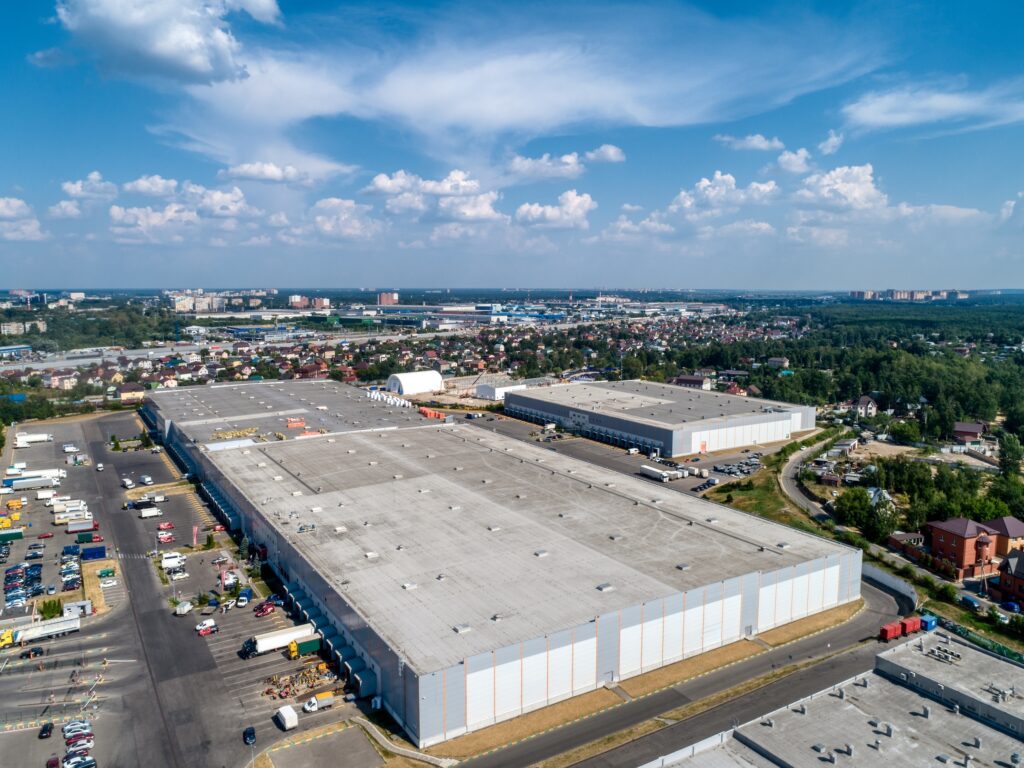
The large Amazon fulfillment center and several major agricultural product distribution warehouses in Bakersfield's industrial east side serve as the logistical backbone for both e-commerce delivery and the San Joaquin Valley's enormous agricultural export network. Kern County's extreme climate — among the hottest in the United States, with persistent summer heat, intense UV radiation, and a unique agricultural dust environment — creates roofing challenges that require contractors with specific experience in California's Central Valley conditions.
Bakersfield is among the hottest cities in the continental United States, regularly recording summer temperatures above 100°F for weeks at a stretch, with July averages above 98°F and frequent highs of 110°F or more. Roof surface temperatures on an unshaded warehouse in Bakersfield can exceed 190°F during peak summer conditions — some of the highest rooftop temperatures in any US logistics market. California's Title 24 energy code mandates cool roof compliance for all nonresidential low-slope applications in Climate Zone 13, which covers Bakersfield, requiring aged solar reflectance of at least 0.55 and thermal emittance of 0.75. White TPO membranes are essentially the only practical choice for new and replacement roofing on Bakersfield warehouses.
Agricultural dust is a roofing concern unique to Bakersfield and the Central Valley. Fine particulate matter — including soil dust, crop residue, and pesticide particulates — settles on warehouse roofs year-round and accumulates in drainage pathways. Unlike urban soot or industrial fallout, agricultural dust can carry moisture-retaining organic compounds that promote biological growth and accelerate membrane surface oxidation. Bakersfield warehouse roofing contractors routinely include drain cleaning and roof surface washing in annual maintenance contracts to prevent debris-induced ponding and the associated membrane degradation.
Drainage engineering for Bakersfield warehouses accounts for a rainfall pattern that is light in annual total — roughly 6 to 7 inches per year — but concentrated in winter months. Unlike markets where summer thunderstorms drive drainage design, Bakersfield's drainage concern is winter frontal systems that can deposit 2 to 3 inches of rain in a 24-hour period after months of completely dry roofs that have accumulated debris in drainage pathways. Internal drain strainers plugged with agricultural dust and debris are a common cause of winter ponding on Bakersfield industrial roofs, making fall drain cleaning an essential maintenance item.
Dock door and truck court flashing on Bakersfield's large distribution buildings must withstand extreme UV and thermal conditions. The combination of intense solar radiation, very low humidity, and high surface temperatures accelerates sealant degradation at dock canopy intersections faster than in any other California climate zone. Bakersfield commercial roofing contractors specify UV-stabilized urethane or silicone sealants rated for continuous exposure above 150°F at flashing terminations, and these sealants are typically re-evaluated and replaced during annual maintenance visits rather than on a reactive basis.
Rooftop ventilation on Bakersfield's large distribution warehouses is driven by the extreme summer heat loads. Evaporative cooling is effective in Bakersfield's dry climate and is common on industrial buildings where employees work in non-refrigerated spaces. Evaporative cooler units create roof penetrations with water supply lines, overflow drains, and distribution system components that must be maintained to prevent roof moisture problems. The mineral content of Kern County water is moderate, but scale buildup in cooler pans and overflow lines can still create drainage issues if maintenance is deferred.
California's Title 24 and ASHRAE 90.1 requirements for insulation R-values in Climate Zone 13 call for R-20 minimum for low-slope commercial roofs. However, given Bakersfield's extreme cooling loads, many warehouse operators specify R-25 to R-30 to reduce mechanical system sizing and ongoing energy costs. SCE (Southern California Edison) serves much of Bakersfield's commercial market and has offered commercial cool roof and efficiency incentive programs that can offset a portion of above-code specification upgrades.
Cost per square foot for warehouse roofing in Bakersfield is influenced by California's prevailing wage requirements, Cal/OSHA compliance costs, and material transport to the Central Valley. TPO re-roofing on large Bakersfield distribution facilities runs $9 to $14 per square foot installed; full tear-off with new polyiso insulation typically ranges from $17 to $24 per square foot. These costs reflect California market conditions but are somewhat below coastal metro areas like Los Angeles and the Bay Area given Bakersfield's lower general cost of living and labor market.
Infrared moisture scanning is the preferred diagnostic tool for large Bakersfield warehouse roofs given the heat-intensive environment. Wet insulation beneath a TPO membrane in Bakersfield's summer heat degrades rapidly and loses R-value even before visible interior symptoms appear. Annual or bi-annual IR scans identify moisture intrusion early, and the cost of surgical removal and replacement of wet insulation sections is a fraction of the cost of a full roof replacement driven by undetected moisture propagation.
- What are California's Title 24 cool roof requirements for Bakersfield warehouse roofing?
- Climate Zone 13 requires aged solar reflectance of 0.55 and thermal emittance of 0.75 for low-slope nonresidential roofs. Given Bakersfield's extreme heat with summer highs regularly exceeding 110°F, white TPO meeting these minimums is essentially the only practical warehouse roofing choice under current California energy code.
- Why is agricultural dust a unique roofing concern in Bakersfield?
- San Joaquin Valley agricultural dust accumulates in roof drain pathways and carries organic compounds that promote biological growth and surface oxidation. Fall drain cleaning before California's rainy winter season is essential to prevent debris-induced ponding when frontal systems arrive after months of dust accumulation.
- How do winter frontal systems affect Bakersfield warehouse drainage?
- Despite averaging only 6 to 7 inches of rain annually, Bakersfield frontal systems can deliver 2 to 3 inches in 24 hours. After a dry summer and fall, debris-clogged drains are common, making pre-winter drain inspection and cleaning a critical maintenance item for large warehouse roofs.
- What insulation R-value do Bakersfield warehouses typically specify?
- Title 24 requires R-20 minimum for Climate Zone 13, but many Bakersfield warehouse operators specify R-25 to R-30 to reduce cooling loads during the extreme summer season. SCE efficiency incentive programs can partially offset the cost of above-code insulation upgrades.
- What does warehouse roofing cost in Bakersfield?
- TPO re-roofing runs $9 to $14 per square foot installed; full tear-off with new insulation ranges from $17 to $24 per square foot. Costs reflect California prevailing wage and Cal/OSHA requirements but are somewhat below coastal metro areas like Los Angeles.