
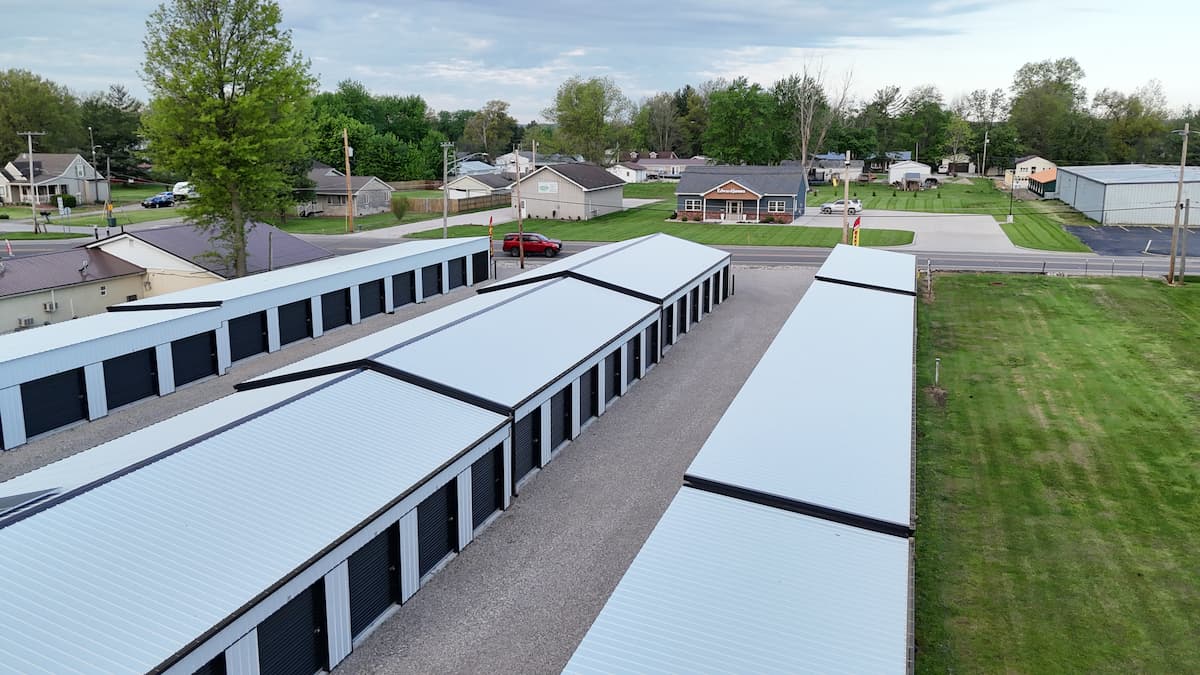
Public Storage operates multiple self-storage campuses in Bakersfield, California, including a large facility on White Lane that serves the city's fast-growing southwest neighborhoods. Bakersfield's storage market is driven by the region's oil and agricultural industries, which generate both transient worker housing demand — people who move frequently and need storage — and commercial storage demand from equipment operators and agricultural businesses. Roofing storage facilities in Bakersfield means working in one of the most extreme heat environments in the continental United States, where summer temperatures routinely exceed 110°F and the San Joaquin Valley's air quality regulations add a compliance layer that contractors from other regions are not accustomed to.
Heat is the dominant factor in Bakersfield roofing system selection. Summer rooftop surface temperatures on dark membranes in Bakersfield can reach 190°F, a level that accelerates oxidative degradation in bituminous systems and causes dimensional distortion in poorly formulated single-ply membranes. White TPO has become the standard specification for Bakersfield storage facilities because its reflective surface keeps membrane temperatures 60–80°F below those of dark surfaces, dramatically extending service life in this extreme environment. California Title 24 mandates minimum solar reflectance and thermal emittance values for commercial roofing in the state's climate zones, and Bakersfield falls in climate zone 13 — one of the hottest — where these requirements are most stringent.
The San Joaquin Valley Air Pollution Control District regulates construction-related air emissions in Kern County, including the VOC content of adhesives and coatings used in commercial roofing. Contractors working in Bakersfield must use SJVAPCD-compliant products, which generally means low-VOC water-based formulations for adhesive applications. This requirement affects product selection for fully adhered membrane systems and requires contractors to maintain documentation of product compliance for potential district inspections. Violations can result in project shutdowns and significant fines.
Climate-controlled storage in Bakersfield faces nearly year-round cooling demand, with the heating season compressed into a brief December-February window. The economics of climate-controlled storage in Bakersfield are heavily influenced by electricity costs, which are substantial given the cooling demand in a climate zone where even nighttime temperatures stay above 75°F during peak summer. A well-insulated roof with a high-reflectivity membrane surface can reduce cooling energy consumption in a climate-controlled storage building by 20–30 percent compared to a dark-surface, low-insulation roof — a difference that compounds over the building's life.
Tenant belongings protection during Bakersfield roofing projects is primarily about keeping the extreme heat and occasional intense rainfall away from stored items. The Central Valley experiences brief but intense winter rain events — though annual rainfall is only about 7 inches, it tends to arrive in concentrated storms that can overwhelm drainage systems if they are even partially clogged. Roofing contractors should ensure drains are cleared before beginning work and maintain temporary waterproofing at all open sections, even if rain seems unlikely given the typically dry conditions.
Seismic considerations apply in Bakersfield, which lies in a seismically active region of California due to its proximity to the San Andreas and Garlock fault systems. The 1952 Kern County earthquake was among the strongest ever recorded in California. Rooftop equipment on storage buildings — particularly HVAC units serving climate-controlled sections — must be seismically braced per California Building Code requirements, and the curbs and penetration flashings serving this equipment need to accommodate building movement without compromising waterproofing integrity.
Security penetrations at Bakersfield storage facilities operate in an environment where the extreme heat accelerates sealant degradation faster than in most other California markets. A silicone sealant bead that would remain supple for ten years in a moderate coastal climate may crack and lose adhesion in five years in Bakersfield's inland heat. Contractors should specify high-temperature-rated sealants for all penetration flashings, and storage operators should include penetration inspection in their annual maintenance protocols rather than assuming flashings will maintain their integrity until the next full re-roofing project.
Multi-building storage campus drainage in Bakersfield is straightforward compared to wetter markets, but the near-zero annual rainfall creates a false sense of security that has led to problems. Drains that go years without receiving significant water can accumulate debris, rust shut, or have their connections compromised by tree root intrusion. When the Central Valley does receive a significant rain event, facilities with dormant drainage systems are suddenly asked to perform at capacity with no recent operational test. Annual drain cleaning and inspection is cost-effective insurance against this scenario.
The Bakersfield commercial roofing contractor market includes some strong regional operators who understand the Valley's specific conditions — extreme heat, air quality regulations, seismic requirements, and Title 24 compliance — and some contractors who have expanded from wetter coastal markets without fully adapting their practices. Storage operators evaluating bids should ask specifically about experience with Title 24 compliance documentation, SJVAPCD product requirements, and heat-rated materials. A contractor who cannot speak fluently to these issues is likely not the right choice for a Bakersfield storage campus project.
- What California energy code requirements apply to Bakersfield storage facility roofs?
- Bakersfield falls in climate zone 13, the hottest in California. Title 24 requires minimum solar reflectance of 0.63 and thermal emittance of 0.75 for low-slope roofs. Compliance documentation must accompany building permit applications.
- How do San Joaquin Valley air quality rules affect roofing product selection?
- SJVAPCD regulates VOC content in adhesives and coatings. Contractors must use compliant products — typically low-VOC water-based formulations — and maintain documentation of product compliance for potential district inspections.
- How hot does a Bakersfield storage facility roof get in summer?
- Dark membrane surfaces can reach 190°F in direct summer sun. White TPO reduces this to approximately 110–120°F, which dramatically extends membrane service life and reduces cooling energy costs in climate-controlled buildings.
- Does Bakersfield's low annual rainfall mean drainage design doesn't matter?
- No. Bakersfield's rainfall arrives in concentrated winter events that can exceed average drainage capacity. Annual drain cleaning is essential since drains can clog silently during the long dry season and fail suddenly when needed.
- Are seismic requirements relevant to storage facility roofing in Bakersfield?
- Yes. Kern County is seismically active, and rooftop mechanical equipment must be seismically braced per CBC requirements. Penetration flashings should accommodate building movement, and contractors should reference current California seismic design standards.