
Bakersfield's food service sector reflects the character of the city itself — a working-class Central Valley hub with a strong fast food culture, a growing number of sit-down chain restaurants along the Rosedale Highway and California Avenue corridors, and a surprisingly vibrant independent dining scene concentrated near the downtown area and the Marketplace at the River development. Major QSR operators including McDonald's, Del Taco, Jack in the Box, and Wingstop maintain dense location networks across Bakersfield, and the agricultural wealth flowing through Kern County supports a middle-market dining economy that keeps casual dining chains along Ming Avenue and Gosford Road busy year-round. Every one of these buildings needs a commercial roofing system built for the specific demands of food service operations in a desert climate with intense UV exposure and genuine temperature extremes.
Bakersfield's summer heat is among the most severe of any major California city, with July and August temperatures regularly exceeding 105°F and rooftop surface temperatures on dark commercial membranes reaching 175°F or higher during peak afternoon hours. For restaurant buildings, this extreme heat compounds the thermal load already generated by commercial kitchen equipment below, creating a punishing environment for membrane materials, adhesive bonds, and the elastomeric sealants used at grease exhaust penetrations. TPO and PVC membranes in white or light gray finishes manage this heat stress significantly better than dark-surface modified bitumen, and their reflective properties reduce the cooling load that restaurant HVAC systems must overcome when ambient heat and kitchen heat combine at peak summer afternoons.
Grease exhaust penetrations on Bakersfield restaurant roofs accumulate deposits faster in summer than in any other season because the extreme heat volatilizes cooking oils more aggressively, sending higher concentrations of grease aerosols through exhaust stacks. These aerosols condense on cooler membrane surfaces near exhaust exits, creating chemical attack zones that degrade standard sealants within months if not cleaned regularly. Restaurant operators on Ming Avenue and Rosedale Highway who schedule annual grease exhaust penetration cleaning in September — after the summer cooking season peaks and before fall rains begin — get the most value from their maintenance investment by addressing the heaviest grease accumulation before it has time to cause membrane damage.
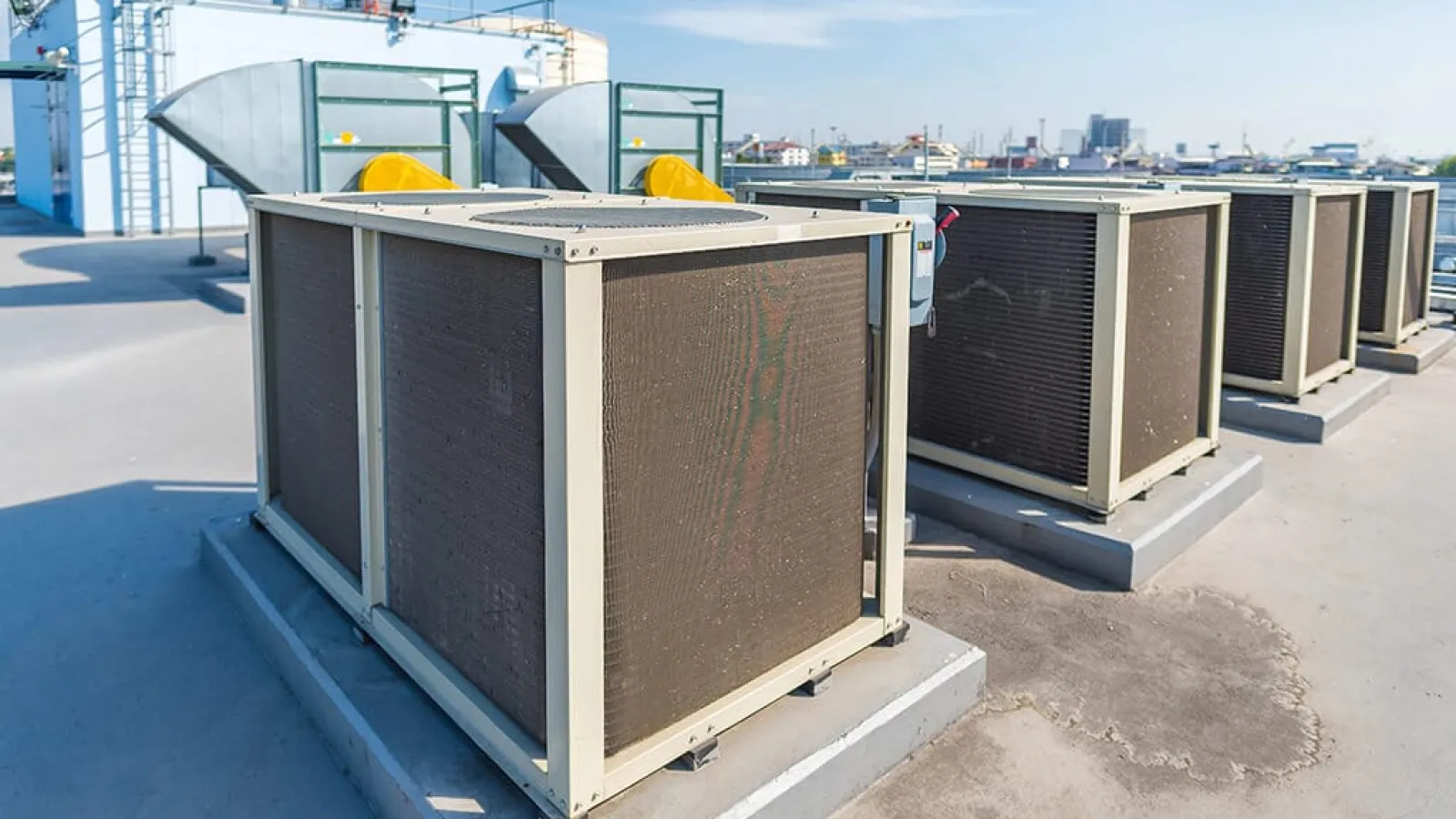
Walk-in coolers and freezers in Bakersfield restaurants work extraordinarily hard in summer, running compressors near capacity to maintain safe food temperatures when ambient air reaches triple digits. The rooftop equipment servicing these coolers — condensing units, air-cooled compressors, refrigerant line penetrations — all require weathertight roof flashings that hold up under the same UV and heat stress that challenges the field membrane. Refrigerant line penetrations are particularly prone to UV degradation on the pipe insulation covering the lines, and when that insulation fails, the temperature differential between the cold refrigerant pipe and the hot roof surface creates condensation that migrates into the penetration flashing. Replacing degraded refrigerant line insulation and re-sealing these penetrations is a straightforward maintenance task that prevents a more expensive cooler performance problem downstream.
Bakersfield's agricultural economy draws significant Hispanic dining traffic to the restaurant corridors along White Lane and South Union Avenue, where taqueries, carnicerias with prepared food counters, and Mexican restaurant chains coexist with national QSR brands. The high-volume tortilla and birria cooking operations in these establishments generate substantial grease and moisture exhaust that concentrates roof wear around kitchen areas. Buildings along these corridors are often older construction with modified bitumen or built-up roofing systems that have been in service for fifteen or more years, and many have accumulated repairs rather than systematic replacements. A complete tear-off and fresh TPO installation on these buildings is often more economical over a ten-year horizon than continuing to patch an aging system.
Fire suppression system penetrations on Bakersfield restaurant roofs require coordination with the Kern County Fire Department when re-roofing projects disturb or replace flashing around suppression system components. Bakersfield is in a region where food service fire suppression compliance is actively enforced, and a re-roofing project that inadvertently affects suppression system access points or pressure relief vents can create a compliance issue that delays restaurant reopening. Contractors who work regularly on Bakersfield food service buildings understand how to coordinate suppression system work into a re-roofing project without triggering inspection holds.
Bakersfield's Tule fog season — the dense ground fog that settles over the Central Valley from November through February — creates moisture conditions that operators more accustomed to the summer heat may not associate with roofing risk. Tule fog deposits liquid water on roof surfaces through condensation rather than rainfall, and this moisture accumulates at low points and penetration flashings over days of continuous fog. A restaurant roof with minor ponding areas or slightly compressed insulation that drains slowly is at real risk from Tule fog moisture accumulation, particularly in roof sections above walk-in coolers where thermal differentials help trap condensation. Pre-fog-season inspections in late October are a prudent addition to any Bakersfield food service roof maintenance program.
The ghost kitchen and delivery-focused restaurant model has found a foothold in Bakersfield, with several multi-brand commissary operations occupying commercial and light industrial space near the downtown area and along the Mohawk Street corridor. These facilities aggregate commercial kitchen operations under roofs that were often designed for storage or light manufacturing, and the retrofit process typically involves cutting multiple new penetrations, upgrading rooftop mechanical equipment, and addressing existing drainage deficiencies that weren't a problem for the prior tenant but become consequential when kitchen humidity loads increase. Pre-conversion roofing assessments prevent the costly discovery of pre-existing deck damage or inadequate drainage after new equipment is already installed.
Health code compliance for roofing near food prep areas in Bakersfield falls under the Kern County Environmental Health Services inspection program, which applies California Food Retail Code standards to commercial food service facilities. Inspectors look for evidence of moisture intrusion, ceiling staining, and mold in all areas where food is handled, and findings in these categories can require immediate corrective action. Bakersfield restaurant operators who maintain documented roofing inspection and maintenance records have a clear advantage during inspections — not because the documentation creates a pass on found deficiencies, but because it demonstrates proactive management that inspectors note favorably and that helps operators respond quickly when issues arise.
- Why is TPO roofing especially important for Bakersfield restaurant buildings?
- Bakersfield's extreme summer heat creates rooftop surface temperatures on dark membranes that accelerate aging and increase cooling loads dramatically. White TPO reflects solar energy rather than absorbing it, keeping surface temperatures manageable and reducing the demand on restaurant HVAC systems already working hard to offset kitchen heat. The energy savings from reflective roofing in a Bakersfield summer can be substantial enough to pay back the cost difference between TPO and dark-surface alternatives within a few years of installation.
- What maintenance is required for grease exhaust penetrations in a hot climate like Bakersfield?
- In Bakersfield's heat, cooking grease volatilizes more aggressively and coats exhaust penetration areas with a heavier annual deposit than restaurants in milder climates experience. Annual cleaning with degreasers rated for roof membrane use, followed by inspection and re-sealing of flashing edges, is the minimum maintenance standard for grease exhaust penetrations in this market. Some high-volume operations benefit from semi-annual cleaning to prevent buildup from causing membrane degradation between annual service visits.
- How does Tule fog affect flat commercial roofs in Bakersfield?
- Tule fog deposits moisture through condensation over extended periods, and roofs with even minor drainage deficiencies accumulate standing water during multi-day fog events that rainfall patterns alone wouldn't create. This slow moisture accumulation finds its way through any small gap at penetrations or flashings, particularly in areas where thermal differentials — like those above walk-in coolers — promote condensation. Pre-fog-season inspection and drain clearing in October is straightforward preventive maintenance for Bakersfield commercial roofs.
- What coordination is required between roofers and fire suppression contractors during a Bakersfield restaurant re-roofing?
- Any re-roofing work that touches flashing around fire suppression system components — including exhaust penetrations and pressure relief points — should be coordinated with the restaurant's fire protection contractor before work begins. In Kern County, changes to suppression system penetrations may require notification to the fire department and subsequent inspection. Building this coordination into the project schedule from the start prevents the last-minute delays that arise when suppression system issues are discovered mid-project.
- Are older strip mall restaurant buildings on Ming Avenue worth re-roofing or should they be replaced?
- The answer depends on the condition of the structural deck and insulation, which can only be assessed accurately by pulling core samples and doing a moisture survey. Buildings with intact decks and dry insulation that have reached the end of their membrane life are often excellent re-roofing candidates that will perform well with a new TPO system for another twenty years. Buildings with accumulated deck damage, multiple reroofing layers approaching structural load limits, or widespread wet insulation are usually better served by a full tear-off and replacement rather than another layer on a compromised base.